ray tracing
Fast, differentiable, gpu-accelerated ray tracing for multiple diffraction and reflection paths
Abstract: Ray tracing is a widely used method to model radio wave propagation in complex environments. However, traditional ray tracing tools are often not differentiable, preventing their use in gradient-based optimization and machine learning pipelines.
Comparing differentiable and dynamic ray tracing: Introducing the multipath lifetime map
Abstract: With the increasing presence of dynamic scenarios, such as Vehicle-to-Vehicle communications, radio propagation modeling tools must adapt to the rapidly changing nature of the radio channel. Recently, both Differentiable and Dynamic Ray Tracing frameworks have emerged to address these challenges.
Radio Propagation Modeling in an Urban Scenario using Generative Ray Path Sampling
Abstract: Radio propagation modeling remains essential for telecommunications research, where Ray Tracing provides a robust tool for simulating electromagnetic interactions in complex environments. In our previous work, we proposed a Machine Learning-assisted Ray Tracing pipeline that uses a generative approach to efficiently sample valid ray paths, significantly reducing computational complexity.
Comparing Differentiable and Dynamic Ray Tracing: Introducing the Multipath Lifetime Map
Abstract: With the increasing presence of dynamic scenarios, such as Vehicle-to-Vehicle communications, radio propagation modeling tools must adapt to the rapidly changing nature of the radio channel. Recently, both Differentiable and Dynamic Ray Tracing frameworks have emerged to address these challenges.
DiffeRT2d: A Differentiable Ray Tracing Python Framework for Radio Propagation
Abstract: Ray Tracing (RT) is arguably one of the most prevalent methodologies in the field of radio propagation modeling. However, access to RT software is often constrained by its closed-source nature, licensing costs, or the requirement of high-performance computing resources.
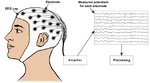
Online classification of covariance matrices for brain-computer interfaces and multimodal signals
How to detect and classify abrupt changes in multimodal signal, such as those related to specific stimulus in an EEG recording, via the …
Min-Path-Tracing: A Diffraction Aware Alternative to Image Method in Ray Tracing
Abstract: For more than twenty years, Ray Tracing methods have continued to improve on both accuracy and computational time aspects. However, most state-of-the-art image-based ray tracers still rely on a description of the environment that only contains planar surfaces.
Scene reconstruction from ray tracing simulation
The objective of this master project is to study and program methods to estimate a 2D scene from emission and reception of signals …